
About the author: Written by Amr Mando, founder of AMRICO. Amr has spent years building outbound pipelines for B2B SaaS and services companies, and now runs done-for-you lead generation campaigns for founders who’d rather not hire an in-house SDR team. Connect with Amr on LinkedIn.
Pipeline doesn’t fill itself. In 2026, the average outbound close rate sits at 1.7%, and 79% of leads never convert without proper nurturing (Dux-Soup, 2026). That gap is exactly why the right B2B lead generation tools matter more than ever.
This guide ranks the top 5 platforms for finding, verifying, and converting B2B prospects – starting with a done-for-you option and moving through the four self-serve tools most sales teams already know. We’ll cover pricing, use cases, and where each tool actually fits in your funnel.
No filler. Just what works.
Key Takeaways
AMRICO has everything that constitutes the outbound engine – prospecting, outreach, and responses processing – without bringing a dedicated SDR team inside.
Apollo.io will give you the most comprehensive and versatile solution when it comes to prospecting and email outreach.
ZoomInfo provides the deepest information set along with intent signals, but it’s pricey enterprise-level stuff.
HubSpot is the strongest choice when you need a full B2B marketing automation tools stack tied to your CRM.
Clearbit, now folded into HubSpot as Breeze Intelligence, is best for enrichment and visitor identification, not standalone prospecting.
Remember, different tools perform different tasks: b2b lead generation tools find and verify contacts, while demand generation tools build awareness and inbound demand. Both are needed by the majority of organizations.
Why B2B Lead Generation Tools Matter in 2026
Cold outreach alone doesn’t convert. Outbound close rates average 1.7%, versus 14.6% for SEO-driven inbound leads (Dux-Soup).
Manual prospecting eats rep time. Reps spend roughly 28% of their week researching targets and hunting for contact details instead of selling.
61% of marketers say quality leads are their top challenge, not volume (G2, 2026). A tool that finds the wrong people just speeds up wasted effort.
AI-assisted lead gen is closing the gap. Teams using AI-powered targeting report up to 50% more sales-ready leads and lower acquisition costs.
Data decays fast. Job changes, company moves, and email turnover mean a contact list from six months ago is already stale. Verification and enrichment aren’t optional anymore.
The bottom line: the tools you pick decide whether your reps spend their day selling or Googling company names.
What to Look for in a B2B Lead Generation Tool
Before comparing platforms, know what actually moves the needle:
Data accuracy – verified emails and direct dials, not guessed formats.
Filtering depth – industry, headcount, funding stage, technographics, job title, seniority.
Outreach built in – sequences, email warmup, reply detection – or at least clean CRM export.
Enrichment – firmographic and intent data that updates automatically.
Fit for your team size – a 3-person startup and a 200-rep sales org need very different tools.
Cost per qualified lead, not just the sticker price. A $15K/year platform can be cheaper than a $49/month tool if the data quality is bad and reps waste hours cleaning lists.
Expert insight: “The biggest mistake I see teams make is picking a tool for its contact count and ignoring deliverability. We watched a client’s domain get flagged as spam in under a week because nobody warmed it up before the first send. Verify the list, warm the domain, then go loud – not the other way around.” – Amr Mando, AMRICO
Top 5 B2B Lead Generation Tools 2026
AMRICO Lead Generation Tool
AMRICO isn’t another self-serve database – it’s a done-for-you B2B lead generation platform built around outbound execution, not just contact lookup. We build the ideal customer profile with you, source and verify prospects, run the outreach, and hand your team qualified replies and booked meetings. Every campaign includes advisory sessions so your internal team learns the system, not just the output.
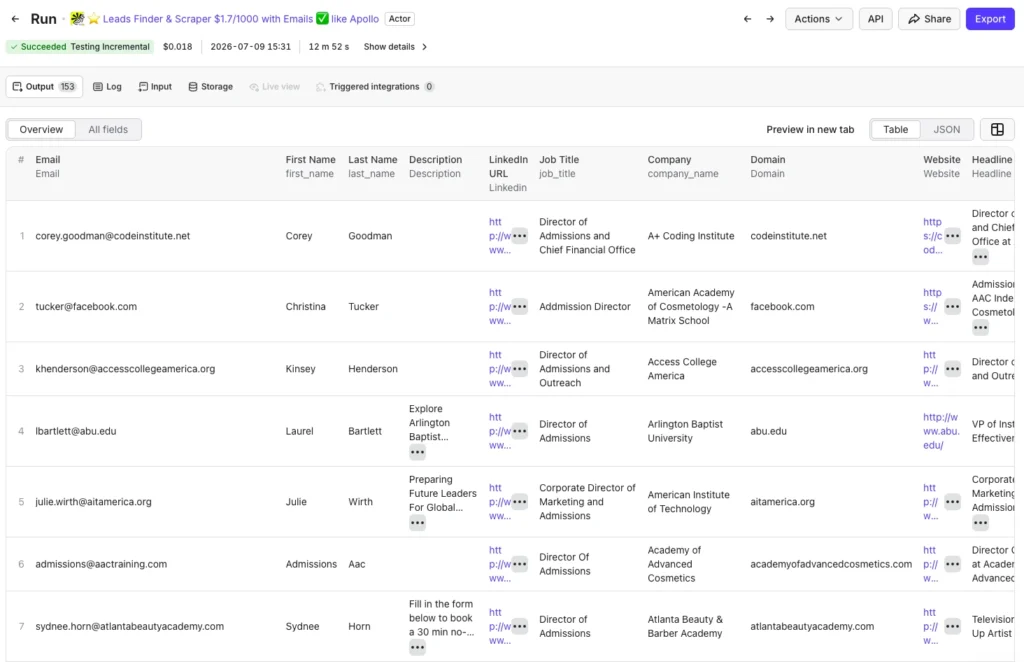
If you want the mechanics behind how we source contacts at scale, our lead-sourcing engine works the same way as the lead finder tool we run on Apify – pulling verified emails, LinkedIn profiles, and firmographic data from public sources, then enriching and validating before a single message goes out.
Best For
Founders and sales leaders who want pipeline without building an in-house SDR team from scratch.
Key Use Cases
Outbound campaigns for B2B SaaS and services targeting a defined ICP.
Market entry – testing a new vertical or region before committing headcount.
Pipeline coverage gaps – filling the calendar between hires or during a growth push.
Sales team training – advisory sessions that upskill your reps on prospecting and outreach cadence.
Book a pipeline audit before you sign another data subscription. We’ll show you exactly how many qualified meetings your ICP can realistically generate per month – no contract required to see the numbers.
Apollo.io
Best For
Startups and mid-market teams that want an all-in-one database plus outreach in a single subscription.
Pros
275M+ contacts across 73M+ companies in one search interface.
Paid plans start around $49/user/month (annual billing), making it the most accessible best b2b lead generation tools option for small teams.
Built-in sequences, dialer, and AI composer credits reduce the need for a separate outreach tool.
Chrome and LinkedIn extensions speed up manual prospecting.
Cons
Data accuracy dips outside North America and in niche industries.
Mobile number credits are limited even on paid tiers.
Deliverability depends heavily on your own domain warmup – Apollo doesn’t manage that for you.
ZoomInfo
Best For
Enterprise teams that need the deepest data and buying-signal intelligence available.
Pros
260M+ contact database with org charts, intent data, and technographic detail few competitors match.
Copilot Advanced and Enterprise tiers surface real buying signals – hiring trends, funding events, website visitor identity.
Deep native integrations with Salesforce and other enterprise CRMs.
Cons
Pricing starts around $15K/year and climbs past $40K/year with add-ons – out of reach for most SMBs.
Requires an annual contract; cancellation windows are tight.
Steep learning curve for teams without a dedicated RevOps function.
HubSpot
Best For
Teams that want lead capture, nurturing, and reporting unified under one CRM – the go-to for b2b marketing automation tools buyers.
Pros
Breeze AI agents automate prospect research, chat qualification, and content creation inside one platform.
Intelligent forms and progressive profiling lift conversion rates on landing pages.
Native lead scoring (manual on all tiers, predictive on Enterprise) prioritizes who sales calls first.
Scales from free CRM to full enterprise automation without switching systems.
Cons
Real automation power only kicks in on Professional and Enterprise tiers – free plan has zero workflow automation.
Enterprise pricing runs into the thousands per month.
Not a standalone prospecting database – you still need a separate lead-finding source to feed it.
Clearbit
Best For
HubSpot users who want automatic firmographic enrichment and website visitor identification.
Pros
Now integrated as Breeze Intelligence inside HubSpot, so enrichment happens natively in your CRM records (HubSpot investor release, 2023).
Turns anonymous website traffic into identified company records.
Reduces manual data entry by auto-filling firmographic fields.
Cons
No longer works as a standalone product outside HubSpot – full lock-in.
Not built for outbound prospecting or list-building on its own.
Pricing runs through HubSpot’s Breeze Credit system, adding another line item to your bill.
B2B Lead Generation Tools Comparison
Tool | Main Use | Best For | Lead Finder? | Outreach Support? | Best Fit |
|---|---|---|---|---|---|
AMRICO | Done-for-you outbound campaigns | Founders/sales leaders without an SDR team | Yes | Yes, fully managed | Companies wanting pipeline, not another login |
|
Apollo.io | Contact database + sequences | Startups, mid-market | Yes | Yes, built-in | Teams that want to run outreach themselves |
ZoomInfo | Enterprise data + intent signals | Large sales orgs | Yes | Limited (add-on) | Enterprise teams with RevOps support |
HubSpot | Marketing automation + CRM | Marketing-led B2B teams | No (needs add-on) | Yes, via workflows | Companies unifying marketing and sales |
Clearbit (Breeze Intelligence) | Data enrichment | HubSpot users | No | No | Enriching existing CRM records |
Which B2B Lead Generation Tool Should You Choose
Match the tool to your bottleneck, not the brand name.
No time or team to run outbound? Go with AMRICO – you get pipeline without hiring.
Want to run campaigns yourself on a tight budget? Apollo.io is the best b2b lead generation tools pick under $100/user/month.
Already have a RevOps team and big budget? ZoomInfo’s intent data justifies the enterprise price.
Marketing and sales need one system? HubSpot ties automation, forms, and CRM together.
Already on HubSpot and just need cleaner data? Add Clearbit/Breeze Intelligence rather than a separate tool.
Most growing B2B companies end up running two of these together: a done-for-you or self-serve prospecting layer, plus a CRM/automation layer to nurture what comes in.
How to Use B2B Lead Generation Tools in Your Sales Process
01. Define Your ICP
Nail down industry, company size, revenue band, and job titles before opening any tool. A vague ICP produces vague lists – garbage in, garbage out.
02. Find Prospects
Use your chosen b2b lead generation platform to pull a list matching that ICP. Filter aggressively on technographics, funding, and headcount growth – these are the signals that separate a warm prospect from a cold name on a spreadsheet.
03. Verify and Enrich Data
Run emails through a verification pass before sending anything. Bounced emails tank sender reputation fast, and a burned domain is expensive to rebuild. Enrich with firmographic data so your first message references something real.
04. Send Targeted Outreach
Personalize beyond {{first_name}}. Reference the company’s growth stage, recent funding, or a specific pain point pulled from enrichment data. Sequence across email and LinkedIn – single-channel outreach gets ignored.
05. Track Replies, Meetings, and Pipeline
Route every reply into your CRM immediately. Measure reply rate, meeting-booked rate, and pipeline generated per campaign – not just emails sent. If a sequence isn’t converting to meetings within two weeks, kill it and test a new angle.


Where a B2B Outbound Lead Generator Fits Into Your Pipeline
A lead generator sits at the top of the funnel, before your CRM and before your sales team ever picks up the phone. Its job is narrow: find the right person, get verified contact details, and start the first conversation.
Everything downstream – nurturing, scoring, closing – belongs to your CRM and b2b marketing automation tools stack. Confusing the two is the most common mistake we see: teams buy a $15K database and expect it to nurture leads, or buy a marketing platform and expect it to find prospects. Neither does the other’s job well.
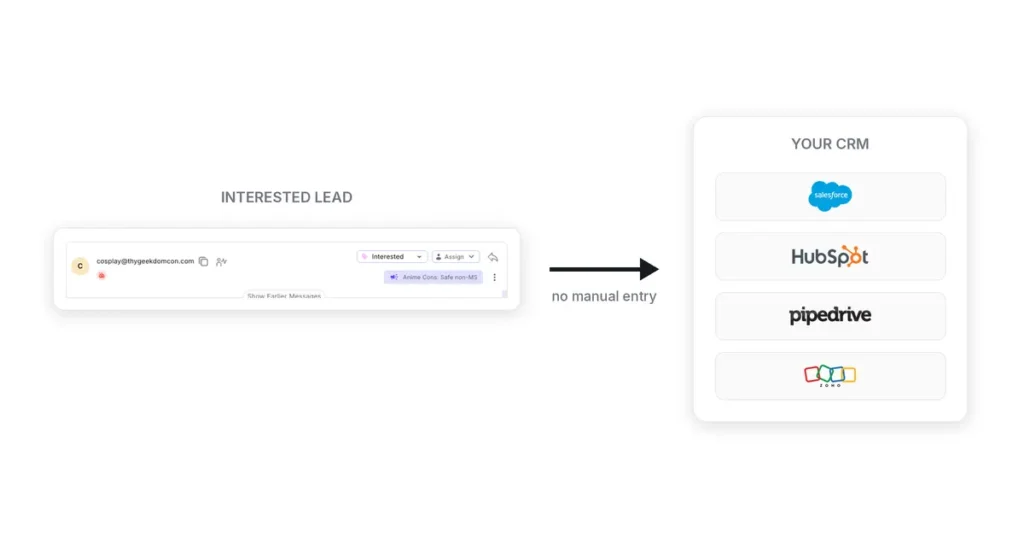
That’s the gap AMRICO fills directly – we plug into the top of your funnel and hand off clean, engaged pipeline to whatever CRM or automation system you already run.
Final Thoughts
No perfect tool exists, only one that is the most suitable for your level. The five-person startup requires Apollo.io‘s pricing model; the company of 200 reps needs ZoomInfo’s depth, while the marketing-driven organization requires HubSpot’s automation capabilities. But if you prefer to ignore the learning curve and simply have meetings booked, then this is precisely the solution AMRICO creates for you.
Decide based on your limitations, not the tool with the fanciest homepage.
FAQs
What are the best B2B lead generation tools for 2026?
AMRICO, Apollo.io, ZoomInfo, HubSpot, and Clearbit (now Breeze Intelligence) cover the range from done-for-you outbound to self-serve databases to enrichment.
What’s the difference between a B2B lead generation platform and a CRM?
A lead generation platform finds and verifies new contacts. A CRM stores, tracks, and manages relationships with those contacts once they’re in your pipeline.
How much do B2B lead generation tools cost?
Self-serve tools like Apollo.io start around $49/user/month. Enterprise platforms like ZoomInfo run $15,000–$45,000+ per year. Done-for-you services like AMRICO are typically priced per campaign or retainer, not per seat.
What’s the difference between lead generation and demand generation tools?
Lead generation tools find and contact specific prospects directly. Demand generation tools build broader awareness – content, ads, webinars – so prospects come to you already interested.
Is Apollo.io or ZoomInfo better for B2B lead generation?
Apollo.io wins on price and ease of use for smaller teams. ZoomInfo wins on data depth and intent signals for enterprise teams with bigger budgets.
Do I still need B2B marketing automation tools if I outsource lead gen?
Yes. Outbound lead generation fills the top of the funnel; automation tools like HubSpot nurture and score those leads until they’re sales-ready.
How does AMRICO’s lead generation service work?
We define your ICP together, source and verify prospects, run multi-channel outreach on your behalf, and deliver qualified replies and booked meetings straight to your calendar – with advisory support so your team understands the process.
How do I choose the right B2B lead generation tool for my business?
Match the tool to your bottleneck: no team to run outreach, go done-for-you; tight budget and DIY appetite, go Apollo.io; enterprise data needs, go ZoomInfo; unified marketing/sales stack, go HubSpot.
Useful Sources
Ready to fill your pipeline without hiring an SDR team?
Talk to Amrico about a done-for-you outbound campaign built around your ICP – verified prospects, managed outreach, and booked meetings, handled end to end.
Leave a Reply